
INDIAN FLUSH (TEEN PATTI)
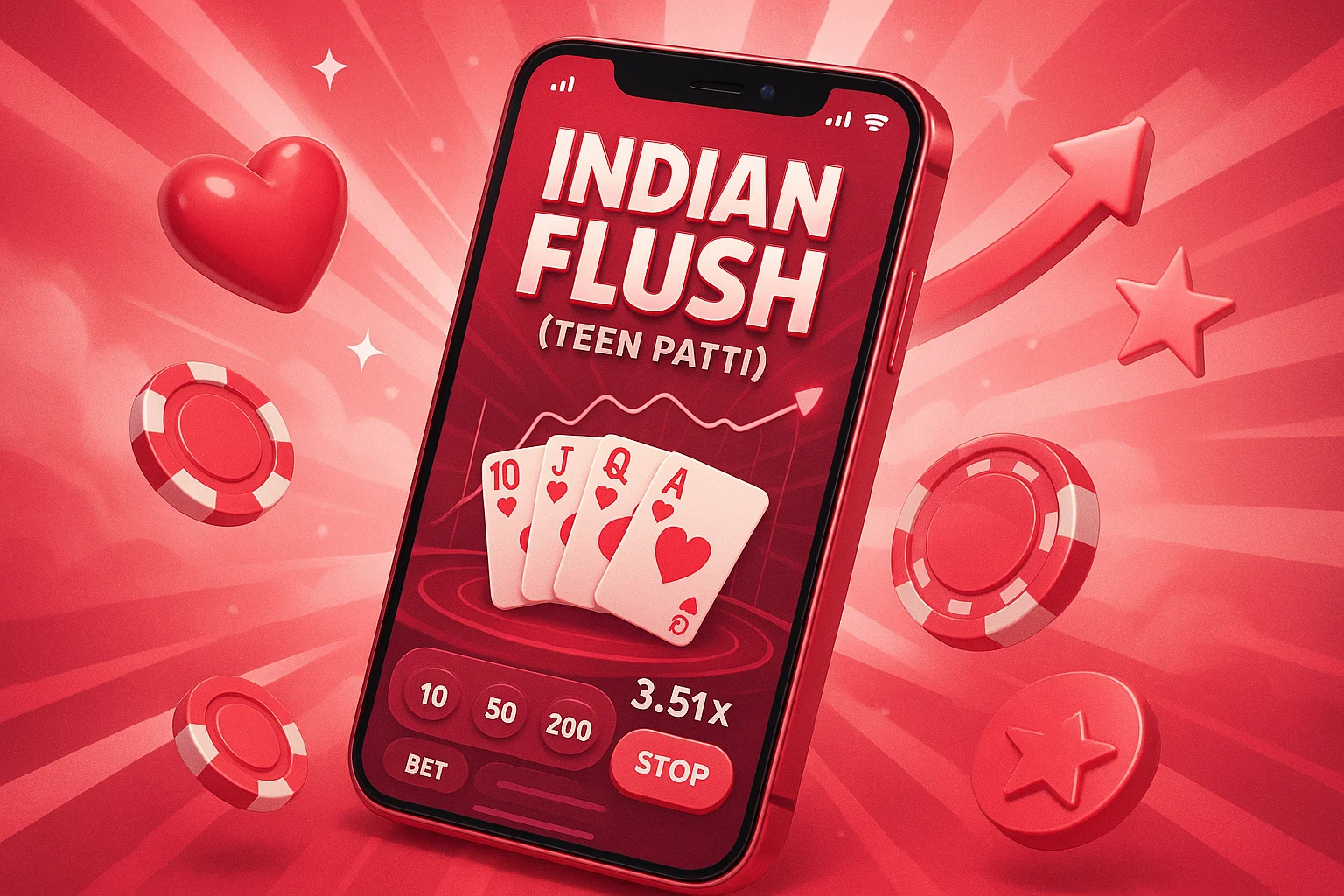
WHAT IS TEEN PATTI?
Teen Patti is a popular Indian card game, commonly referred to as Indian Flush, played using a standard 52-card deck. The primary aim of this game is to form the strongest three-card combination compared to all other players at the table. Players also strive to build the pot or prize pool to its maximum potential, ensuring the largest possible payout.
HOW TO PLAY?
The game kicks off when every player contributes an initial wager into the ‘Boot’ or central pot.Once all players have made their opening bet, the dealer distributes three cards to each participant, one card at a time, all face down. Players can choose between two playing styles: ‘Seen’ or ‘Blind’. Selecting Seen allows you to view your cards, while choosing Blind means your cards stay face down and hidden from you. Should you start as a Blind player, you retain the option to look at your cards during any subsequent round, transitioning into a Seen player from that point forward.Play continues until only one player remains at the table, or until two players remain and one requests a showdown by revealing their cards face up. If you’re the sole remaining player, victory is yours.During a showdown, all cards are revealed and compared. The hand containing the highest-ranking combination claims the win. Should both hands tie, the player who initiated the showdown loses automatically.

RULES TO KNOW:
The minimum wager depends on the base stake established before the game begins.
In Indian Flush or Teen Patti, once the three cards are distributed face down, players choose whether to play as Seen or Blind. Seen means viewing your dealt cards, while Blind means playing without looking at them, keeping them face down. Starting as Blind doesn’t lock you in—you can switch to Seen at any round by simply viewing your cards and continuing as a Seen player. Blind players must bet at least the minimum stake, whereas Seen players must bet double the minimum stake amount.
Players continue placing bets until one of these situations occurs:
Scenario 1: All players except one have folded—the remaining player wins the round.
Scenario 2: All players except two have folded—one player must call for a Show, revealing both hands.
Several important rules govern Indian Flush or Teen Patti gameplay:
- A Show can only happen when exactly two players remain at the table.
- During a Show, both players reveal their cards. The player holding the superior combination wins. In case of a tie, whoever called for the Show loses.
- On your turn, you may request a Sideshow from the player who bet immediately before you. This request can be accepted or declined without affecting the main game.
- If a Sideshow is accepted, both players compare their hands privately. The player with the weaker combination must fold immediately, while the stronger hand continues playing.
- If both hands are equal during a Sideshow, the player who requested it must fold right away.
Card combinations in Teen Patti or Indian Flush rank from highest to lowest as follows:
Trail or Trio: Three cards of identical rank or value. This represents the highest possible combination, with three Aces being the ultimate hand.
Straight Flush: Three consecutive cards all in the same suit. Examples include 10, J, Q of Spades or 4, 5, 6 of Diamonds.
Sequence or Straight: Three consecutive cards regardless of suit. For instance, Jack, Queen, King in mixed suits, or 5, 6, 7 in any combination of suits.
Color or Flush: Three cards of the same suit but not in sequence. Examples include Ace, Jack, King of Hearts or 2, 5, 9 of Clubs.
Pair or Two of a Kind: Two cards of matching rank plus one unrelated card. Examples include 8, 8, Ace or 4, 4, 9.
High Card: When no sequence or suit match exists, the highest individual card determines the winner. The player holding the highest-ranked single card wins. If the top cards tie, the next highest card breaks the tie.